Description
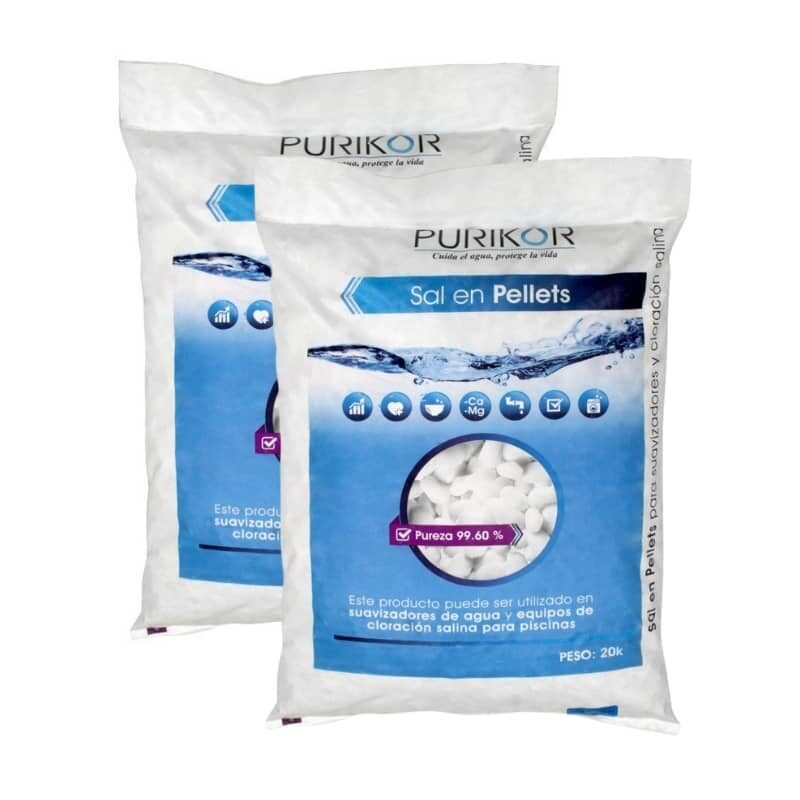
Pelleted salt for water softener Roche brand (Pellets)
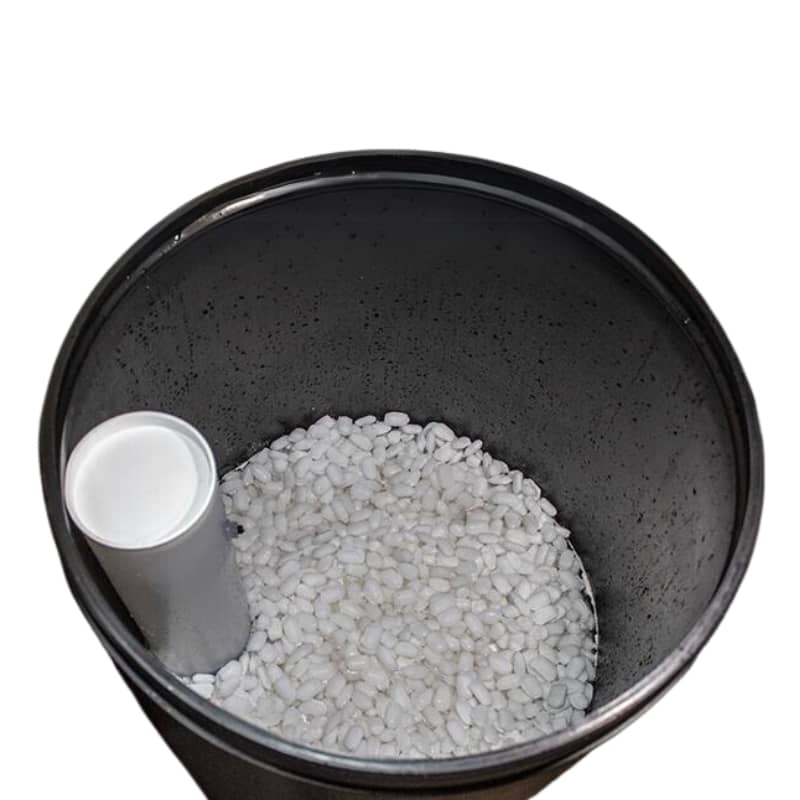
Roche pellet salt for water softener: Each salt pellet consists of sodium chloride from natural sources such as seawater. In addition, it is presented in the form of a water-soluble tablet. This is why pelletized salt is recommended for water softeners.
What is salt pellets used for?
In addition, this product is used in the water treatment industry for the regeneration of ion exchange resins.
Main product applications

Water Treatment
Pellet salt is used for brine production in hard water softening equipment. This type of salt, due to its compact form and high degree of purity, facilitates the production of saline solutions or brines for the regeneration of ion exchange resins. It allows to recover its functional capacity to retain calcium and magnesium ions.
The benefits of using salt pellets

Physicochemical characteristics
Each bag of salt weighs 20 kg and its dimensions are: 60.75 cm long and 28 cm high approximately.
|
Code
|
Presentation
|
Physicochemical characteristics | |||||
| Sodium Chloride NaCI (purity) |
Sulfate | % Calcium (Ca) | Magnesium (Mg) | Insoluble solids | % Humidity | ||
| P_118018 | Pellet Salt – 20 kg. bag. | Minimum 99.60 | Maximum 0.30 | Maximum 0.10 | Maximum 0.04 | Maximum 0.05 | Maximum 0.20 |
Explanation of the physicochemical characteristics of water softener salt:
Sodium Chloride (NaCl):
The salt used to regenerate resins in water softeners must contain a high percentage of sodium chloride, reaching purity levels of between 99.6% and 99.8%. This high purity is key to efficient operation of the ion exchange system, which is responsible for removing hardness from the water. Commercial salts may have small amounts of impurities, but the NaCl content remains the main indicator of quality.
Undesired Minerals (Calcium and Magnesium):
Calcium and magnesium, which are responsible for water hardness, are undesirable in softener salt. Therefore, their concentration in the pellets should be as low as possible, generally kept below 0.15%.
These minerals, if present in significant quantities, can interfere with proper resin regeneration.
Insoluble Solids:
Insoluble compounds found in salt can affect the maintenance of softening systems, as they tend to accumulate in the form of sludge at the bottom of the brine tank. This sludge can cause damage to valves and other components, increasing the frequency of cleaning and maintenance of the system.
Ideally, the salt should have a minimum insoluble solids content, generally less than 0.1%.
Humidity:
The moisture content of pelleted salt ranges from 0.06% to 0.2%. A salt with low moisture content ensures a higher yield, since a greater amount of active product is available for the regeneration process.
Storage conditions of Roche pellet salt:
- Low storage temperature: below 30°C.
- Store at a relative humidity of less than 70%.
- The environment must be clean and free of aromas.
Advantages of pellet salt over granular salt in water softeners.
1. Solubility and Dissolution Kinetics:
First, it is important to note that salt pellets are manufactured with a higher degree of purity and fewer insoluble impurities compared to granular salt. As a result, this ensures a more complete and homogeneous dissolution, which benefits the system as a whole.
In addition, due to the compact shape and uniform size of the pellets, the dissolution kinetics tend to be more controlled. Therefore, the risk of salt blockages forming at the brine tank outlet is significantly reduced, ensuring a constant flow of the salt solution to the softener.
2. Less compaction:
Secondly, the accumulation of agglomerates in the brine tank, which frequently occurs with granular salt, can block the passage of the salt solution to the softener. This, in turn, increases the need for maintenance. However, when pelletized salt is used, such accumulation is avoided, mainly due to the physical resistance conferred by its shape. As a consequence, system maintenance becomes less frequent.
3. Regeneration Efficiency:
On the other hand, the salt pellets dissolve more uniformly and consistently. This process generates a high-quality brine, which optimizes the performance of the softener resins by better retaining sodium ions. Ultimately, this improves the efficiency of the water softener regeneration process.
4. Dosage Control:
Finally, uniformity in pellet size and shape facilitates more accurate dosing of salt into the brine tank. This is crucial because proper dosing ensures that the concentration of the salt solution is sufficient to regenerate the resins completely. At the same time, it avoids overuse of salt, which not only improves system efficiency, but also helps reduce operating costs and environmental impact.
More information:
Do you need to quote resin and salt for your softener?
Contact us at: 33 38340906.