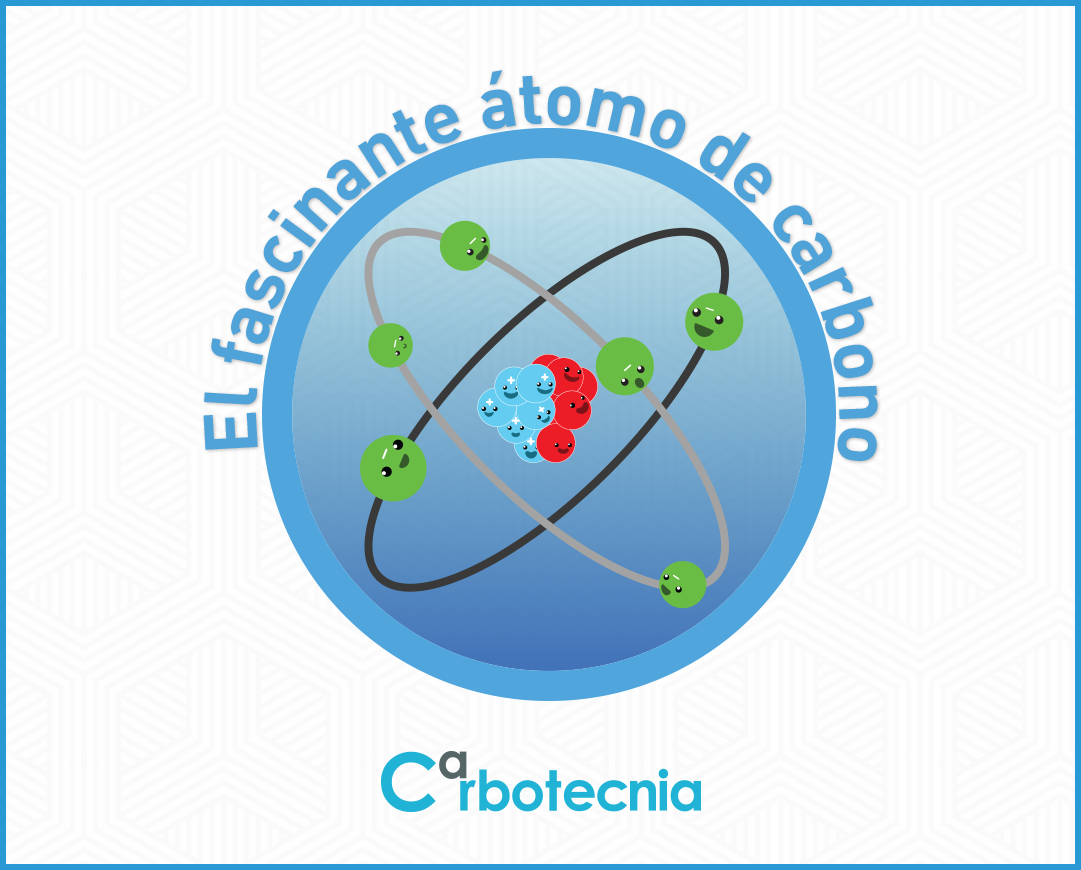
The fascinating carbon atom
Life on our planet is made possible by two phenomena that constitute a rarity in the world of chemistry: hydrogen bonding (erroneously called hydrogen bridging) and carbon catenation .
In the case of the water molecule,H2O, hydrogen bonding is an attractive force that occurs between the hydrogen of one molecule and the oxygen of another molecule. This attraction is due to the fact that hydrogen is electropositive, and oxygen is electronegative. Without hydrogen bonding, water could not exist in a liquid or solid state at Earth’s ambient temperature. It would be a gas, as would all compounds whose molecules have a molar mass as low as that of water.
On the other hand, catenation is the ability of an element to form chains, i.e., to chemically bond with itself. Carbon is not the only element that has this capacity, but it is the one that tends to do so the most, and in the most varied forms.
THE CARBON ATOM

The symbol for the carbon atom is “C”. In English, “carbon” and “carbon” do not mean the same thing: “carbon” is the chemical element, while “carbon” is a solid composed mainly of carbon atoms. The carbon found on Earth was not formed within our solar system, but in previous generations of stars, more than 5 billion years ago, through nuclear fusion reactions in their interiors. When those stars exhausted their fuel, they expelled carbon into space, and that material formed part of the cloud of gas and dust that, when it collapsed, gave rise to the Sun and the planets. Although carbon represents only about 0.025 % by mass of the Earth’s crust (and about 0.002 % of the entire planet), it is an essential element for life and geochemical processes. In global abundance within the Earth, it ranks about fifteenth among the chemical elements.
Carbon belongs to group 14 of the periodic table, whose elements are: carbon (C), silicon (Si), germanium (Ge), tin (Sb) and lead (Pb). The first three are nonmetals, and the last two are metals. All these elements share the ability to catenate, but none of them do it as easily as carbon.
In addition to concatenating, carbon can do so by multiple bonding, which means bonding to each other by double and triple bonds. The latter property is common to nitrogen and oxygen, but in such cases, catenation is relatively rare.
Carbon atoms can bond to each other in a variety of ways and in a number of atoms impossible for any other element. They can form chains of thousands of atoms or rings of all sizes; these chains and rings can have branches. The carbons of these chains and rings are joined by other atoms; mainly hydrogen, oxygen, fluorine, chlorine, bromine, iodine, nitrogen, sulfur, phosphorus…
This particular characteristic is what allows so many carbon compounds to exist. The number of compounds containing carbon is several times greater than the number of substances that do not contain it.
THE EMERGENCE OF LIFE AND THE PROCESS OF CONVERSION OF CO2 INTO ORGANIC MOLECULES THROUGH PHOTOSYNTHESIS.

During the formation of the Earth, its atmosphere was composed mainly of water vapor, carbon dioxide and nitrogen, along with other gases emitted by volcanic action. Life began with plants about 3 billion years ago, in the warm waters of the oceans and seas, and originally in primitive plant forms. This form of life evolved due to its ability to photosynthesize, taking carbon dioxide from the atmosphere as a raw material and replacing it with oxygen. In the process of photosynthesis, the plant convertsCO2 into the cellulose chains and other molecules that make up the plant, which, as we will see below, chemists have called organic molecules.
The earliest forms of plants and algae grew in massive abundance over millions of years. Animal life forms evolved much later, probably around 2000 million years ago, and were totally dependent on the oxygen generated by the flora of that time.
Herbivorous animals feed on plants, and carnivorous animals feed on other animals. Therefore, all living beings, plants and animals, start fromCO2 as raw material to form our tissues. We can be aware, then, that all our tissues wereCO2.
The main compound present in the human body is water, but in second place are organic molecules based on carbon chains. Therefore, oxygen represents the major part of the mass of the human body (65%), and in second place is carbon (18%). Six elements make up 99% of the mass of the human body: oxygen, carbon, hydrogen, nitrogen, calcium, and phosphorus. The content of the elements aluminum and silicon, although very abundant on Earth, is very low in the human body.
ORGANIC CHEMISTRY, OR CARBON [CHAIN] CHEMISTRY
Originally, chemical compounds were divided into two groups: inorganic and organic, depending on where they came from. Inorganic compounds were those that came from minerals, and organic compounds were those obtained from plant and animal sources, i.e., from materials produced by living organisms. Until about 1850, many chemists believed that organic compounds had to have their origin in living organisms and, consequently, could never be synthesized from inorganic substances.
All compounds from organic sources contained the element carbon. Even after it was established that these compounds did not necessarily have to come from living sources, since they could be synthesized in the laboratory, it was convenient to keep the name organic to describe them, and so to date, compounds are classified as inorganic and organic.
Organic compounds have been grouped into families that, in general, have no equivalents among inorganic compounds.
Organic chemistry has developed methods to break down complicated molecules to rearrange atoms and generate new molecules, to add atoms to existing molecules or to substitute new atoms for old ones. Their goal is to synthesize new molecules that provide solutions or improvements to human activities. The Chemical Abstracts Service (CAS) has registered several tens of millions of molecules, and more are being registered every day.
THE FORMATION OF THE OIL FIELDS AND COAL MINES
Oil and natural gas are organic compounds that were formed from organic matter accumulated in sediments of the geological past, and in association with inorganic matter from the seas over millions of years.
On the other hand, around 500 million years ago, the flora had evolved considerably, and moved from the warm waters of the seas to the land. As we entered the Carboniferous era, massive growth occurred in the form of tropical rainforests. At this time, the continents were also slowly moving northward through the warmer climates of the equatorial regions, with their torrential storms. Continental drift with the corresponding depressions and uplifts of the earth’s crust caused growing areas of these rainforests to slowly, over millions of years, become submerged in river estuaries and the sea. Not all the trees in the rainforests that grew over a period of about 300 million years formed coal mines. Probably only one in a thousand billion (1 x10¹⁵) trees ended up in a coal mine. The rest simply decomposed into gaseous compounds and minerals.
An important stage in the formation of charcoal from the material in these rainforests was the swamp, with its botanical matter decomposed by aerobic and anaerobic bacteria to create the residual material that became coals under subsequent time, temperature and pressure influences associated with the burial of material, usually at deep distances.
This carbonization process continued beneath the earth as the continents moved northward to where they are today. The properties of coals from different coal-bearing areas of the world are not identical, including coals found at different levels within the same beta. Some coals were formed long after the end of the Carboniferous era, i.e., in the Cretaceous period, associated with the dinosaurs.
The oldest or most mature coals are anthracites, which essentially do not melt when heated. Hard (or bituminous) coals, of intermediate age, melt on heating. These coals are used to make metallurgical coke for the iron and steel production industries. The youngest coals are lignites and brown coals, which are relatively rich in oxygen and hydrogen.
Therefore, the raw materials of the coal industry are clearly associated with the world’s fossil minerals. Due to the wide range of geological conditions that existed in the formation of both oil and coal, it is understood that these materials exhibit considerable variation in their physical and chemical properties. Such differences lead to different uses of these materials, particularly in the iron and aluminum production industries.
CARBON ISOTOPES, AND CARBON-14 AS A METHOD FOR MEASURING THE AGE OF REMAINS OF ORGANIC ORIGIN
What defines each element is its atomic number, which corresponds to the number of protons contained in its nucleus. The atomic number of carbon is 6. But each element can have a different number of neutrons. Atoms of the same element whose nucleus has a different number of neutrons are called isotopes. This makes the isotopes differ in their atomic mass.
Natural carbon has three isotopes. The most common is carbon-12 or 12C, which represents 98.89 % of all the carbon that exists on Earth. Its nucleus consists of 6 protons and 6 neutrons. Carbon-13(13C) is also stable, representing 1.11% of the carbon present on Earth, and its nucleus contains 6 protons and 7 neutrons. And carbon-14(14C) is a radioactive isotope of carbon, present in a very small amount. Its nucleus contains 6 protons and 8 neutrons.
The half-life of 14Cis 5730 years. Half-life is the time it takes for the concentration of a decaying element or compound – as in the case of radioactive elements – to decrease by half. 14Cis constantly being formed as a result of reactions that occur between neutrons from cosmic rays and nitrogen atoms in the upper layers of the atmosphere. The neutron replaces one of the protons of a nitrogen atom and converts it into a 14Catom.
Thus, the production of carbon-14 is constant and is present in the atmosphere in very small quantities. The 14Catoms react with gaseous oxygen to form radioactive carbon dioxide molecules, which are absorbed by plants in photosynthesis. Creatures that eat plants and creatures that feed on creatures that eat plants all contain the same proportion of radioactive 14C. When the organism dies, carbon ingestion ceases, and the carbon already present in the organism decays. Therefore, the age of an object can be determined by measuring the amount of 14Cpresent in a sample of the object. This method provides an absolute scale for dating objects between 1,000 and 20,000 years old. W. F. Libby was awarded the Nobel Prize in chemistry in 1960 for the development of the radiocarbon dating technique.
CARBON ALLOTROPES
Allotropy is the property of some elements to exist in different structural forms in the same physical state. These forms are called allotropes.
Two common allotropes of carbon have been known for centuries: diamond and graphite. Both are crystalline solids, consisting exclusively of carbon atoms bonded together by covalent bonds. However, they differ completely in the way those atoms are bonded. In recent times, a whole family of new structures has been discovered, such as fullerenes, carbon nanotubes and graphene.
Diamond
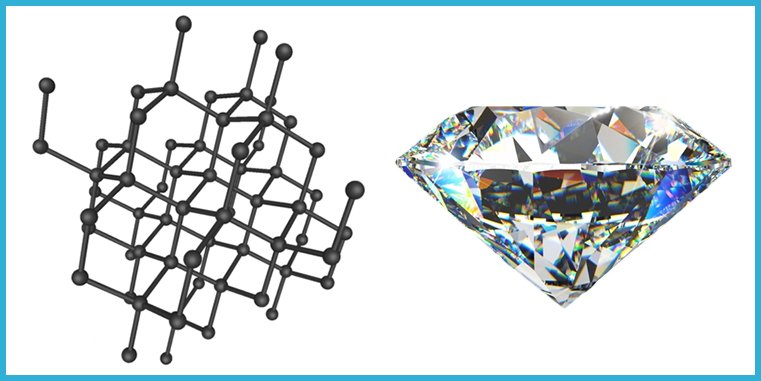
Diamond has a highly ordered three-dimensional structure, in which each carbon atom is bonded to four other carbon atoms. This rigid network explains why it is the hardest and most rigid natural material known. Its stable structure prevents the displacement of electrons, making it electrically insulating. However, the strong bonding between its atoms gives it an extraordinary thermal conductivity, about five times higher than that of copper. Its density is 3.5 g/cm³.
Graphite
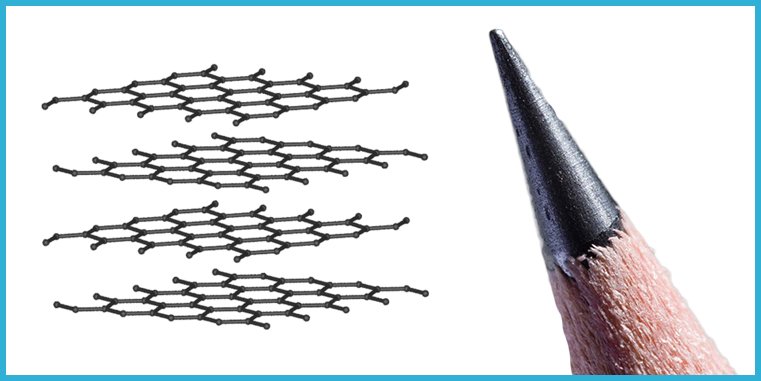
Graphite, on the other hand, is made up of flat layers of carbon atoms arranged in the shape of hexagons, like a honeycomb. Each layer can easily slide over the other because they are bound together by very weak forces. This characteristic gives it its lubricating properties. Inside each layer there are electrons that move freely, which allows it to conduct electricity.
Graphite is used as a lubricant, a conductive material and in the manufacture of lead pencils, where it is mixed with clay: the more clay it contains, the harder the line. The common mixture is called HB; the harder ones, H, and the softer ones, B.
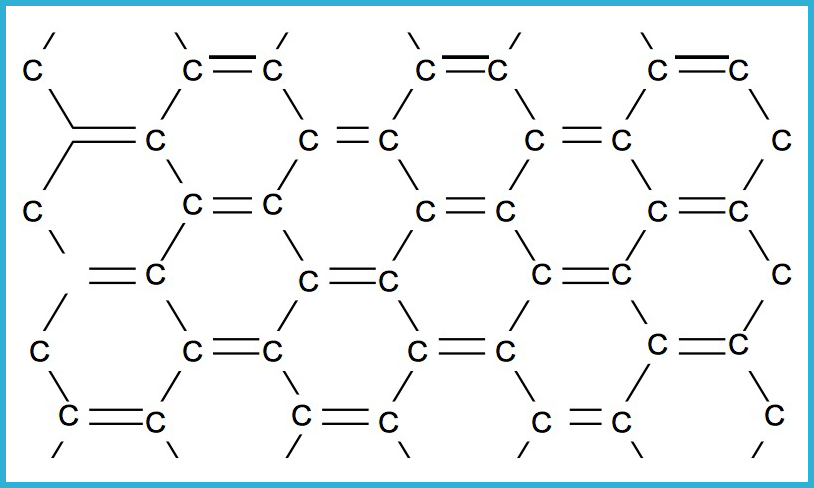 Graphene plate
Graphite can be transformed into diamond under conditions of high pressure and temperature, on the order of 5 GPa (≈50,000 atm) and 1,600 °C. This process is applied industrially to produce synthetic diamonds, which do not possess the appropriate optical and aesthetic characteristics for use as gems, but are of great utility in cutting and drilling tools for very hard materials.
The discovery of a new family of carbon allotropes was an unexpected finding. Fullerenes are structures in which the carbon atoms are arranged in spherical or ellipsoidal shapes, consisting of five- and six-membered rings in a football-like pattern. The first one identified was C₆₀, known as buckminsterfulerene or informally “footballene.” This molecule, with 60 carbon atoms, forms a perfect sphere and is the easiest fullerene to prepare. C₇₀, the next most abundant, takes on an ellipsoidal shape, resembling a rugby ball.

This family is named in honor of R. Buckminster Fuller, the visionary 20th century architect and inventor, creator of the geodesic dome, a structure whose arrangement of triangles reproduces the same geometric pattern as the C₆₀.
In addition to spherical shapes, fullerenes can be organized into cylindrical tubes, known as carbon nanotubes, with exceptional mechanical and electronic properties. Naturally occurring fullerenes have been found to appear in soot, graphite deposits and even meteorites and interstellar clouds, suggesting that these molecules are common in the universe.

The chemistry of fullerenes and their derivatives continues to be a field of intense research, and today these molecules are commercially available for applications in electronics, catalysis and advanced materials.
Amorphous or semigraphitic carbon forms
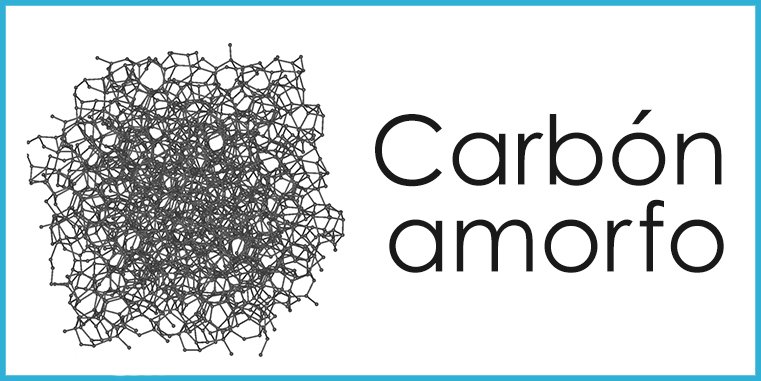
An amorphous carbon is one in which, unlike graphite or diamond, the chains or groupings of carbon atoms do not have an ordered crystalline arrangement. A semi-graphitic carbon is one in which part of its structure has graphitic regions, i.e., areas where the carbon atoms are partially arranged in sheets similar to those of graphite.
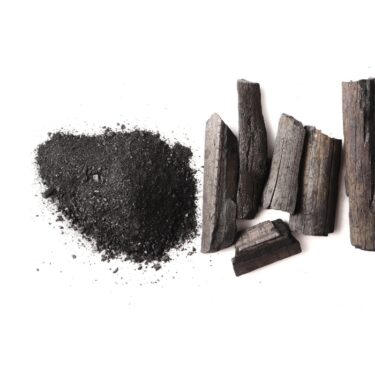
The main uses of coal are as a source of energy and as a reducing agent. For these purposes, an impure form of coal called coke, obtained by heating hard coal in the absence of air, is used. During this process, the complex structure of hard coal is destroyed, volatile compounds (mainly hydrocarbons) are eliminated and the residue is a porous solid, of low density, silvery color and metallic luster. The gases and vapors released are a major environmental problem, as they contain carcinogenic compounds. Coke is mainly used in iron production.
Carbon black is a finely powdered form of carbon, also known as micrographite, obtained by incomplete combustion of organic materials. It is produced between 15 and 20 million tons a year and is mixed with rubber to increase tire strength and reduce tire wear. Each average tire contains approximately 3 kg of carbon black, which is also responsible for its characteristic black color.
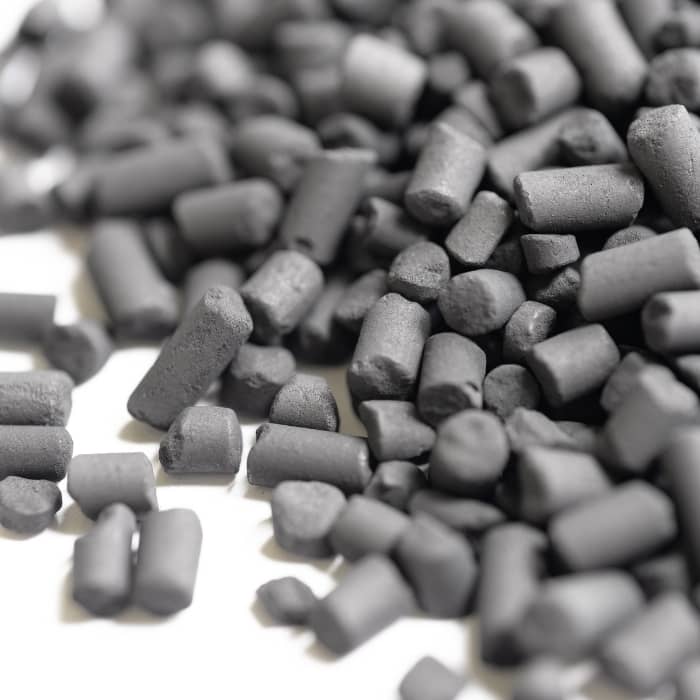
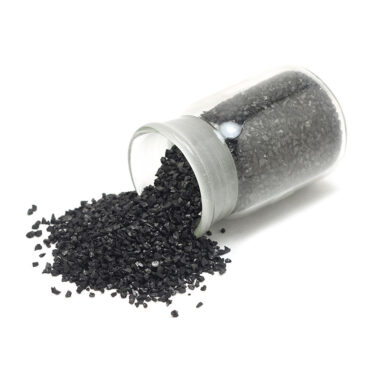
Another form is activated carbon, a material with an extremely high surface area (between 500 and 3000 m²/g) which gives it a high adsorption capacity for non-ionic and low polarity compounds, such as most organic molecules.
Finally, carbon blocks are of great industrial importance as electrodes in electrochemical and thermal processes. For example, about 7.5 million tons of carbon are consumed each year in the aluminum industry. And, of course, charcoal remains a summer classic in domestic barbecues.
Carbonates and bicarbonates
Carbonates and bicarbonates
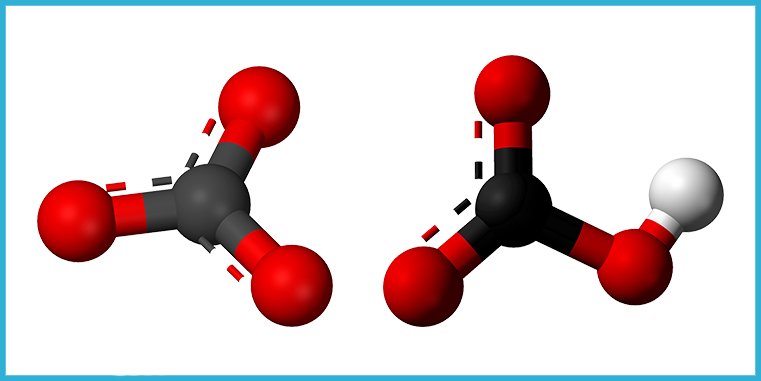
The carbon atom also forms inorganic compounds that are very common in the earth’s crust and in fresh and salt water, such as carbonates (CO₃²-) and bicarbonates (HCO₃-). The most frequent are those of sodium, calcium and magnesium. These compounds, together with hydroxides, determine what is known as the alkalinity of water.
Carbon atoms can form organic molecules at one moment and inorganic molecules at another. The set of transformations that this element undergoes is called the carbon cycle.
This text does not pretend to describe exhaustively the characteristics of all the compounds in which carbon participates. Some of them are of great interest to humans: the greenhouse effect of carbon dioxide (CO₂) in the Earth’s atmosphere; biochar, beneficial for the cultivation of many plants; carbon monoxide (CO), highly toxic to aerobic animals; and carbides, among others.
Author:
Germán Groso Cruzado
Bibliography of carbon cycle contents
Choppin, G. R., B. Jaffe, L. Summerlin and L. Jackson, CHEMISTRY, Cultural Publications, Mexico, 1974. Carbon cycle.
Marsh, H., E. A. Heintz and F. Rodríguez-Reinoso (Eds.), INTRODUCTION TO CARBON TECHNOLOGIES, Publicaciones de la Universidad de Alicante, Alicante, 1997. Carbon cycle.
Morrison, R. T. and R. N Boyd, ORGANIC CHEMISTRY, 3rd Ed., Fondo de Cultura Interamericano, Mexico, 1976. Carbon cycle.
Rayner-Canham, G., QUÍMICA INORGÁNICA DESCRIPTIVA, 2nd Ed., Pearson Educación, México, 2000. Carbon cycle.
Related articles:
What is Activated Carbon and what is it used for?
What is the iodine number of activated carbon?
Share:
If you need more information, please contact us.
Some products that may interest you
-
Amin-Carb Activated carbon for amine treatment
Add to quote -
Megapol 28-4 Powdered activated carbon for decolorization of wines, sugar and other liquids
Add to quote -
AAM Activated carbon for color removal in tequila and other distillates
Add to quote -
Megapol M – Powdered Activated Carbon for Decolorization
Add to quote -
AA-3 Activated carbon to reduce color and flavor in tequila and other distilled spirits
Add to quote -
EBA-9 Activated carbon for treatment of tequilas and other distillates
Add to quote -
IA-4 Activated carbon for treatment of tequila and other distillates
Add to quote -
Micro 10 Activated carbon from coconut shells
Add to quote