Description
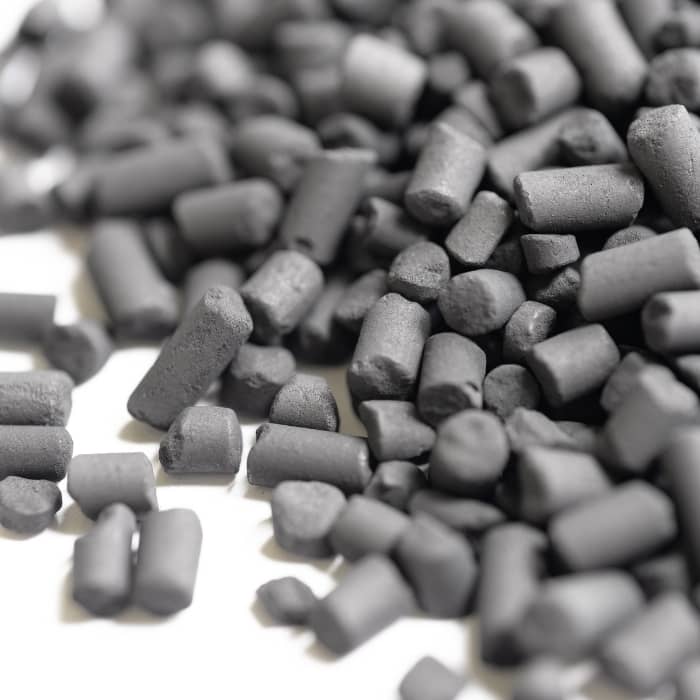
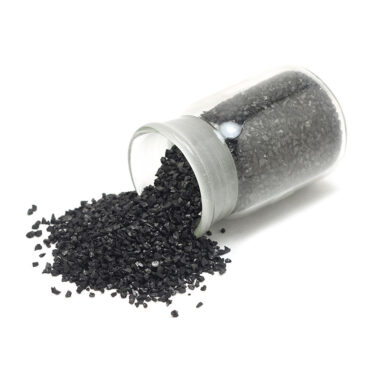
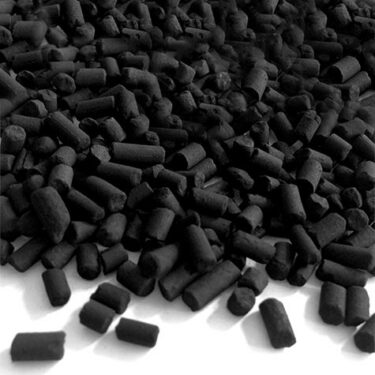
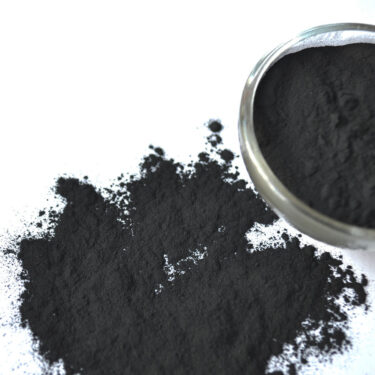
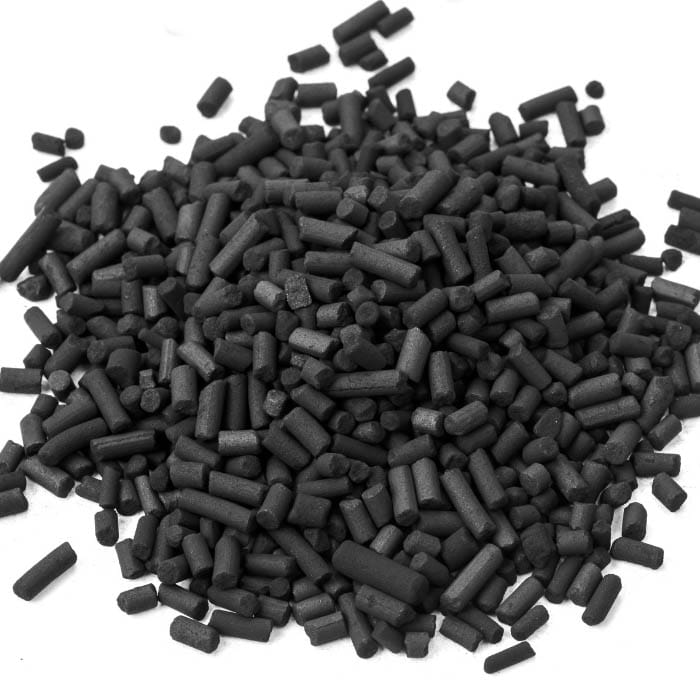
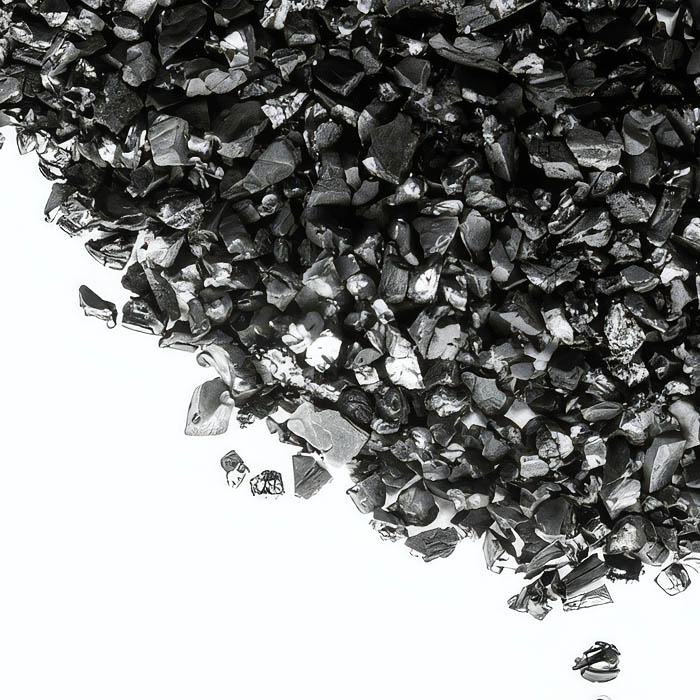
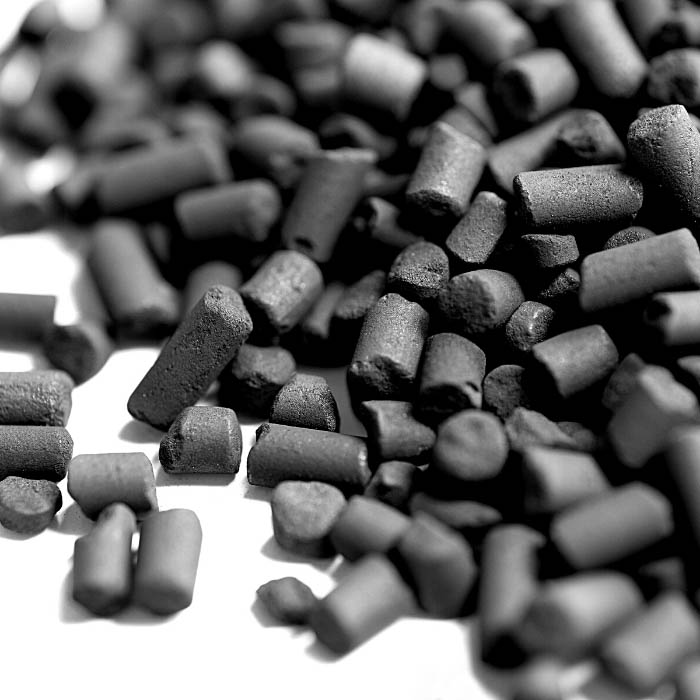
Granular activated carbon for acid gases and organic vapors
Applications:
- Cartridge respirators (masks).
- Drainage odors.
- Desulfurization of biogas and natural gas.
- Air treatment in spaces where corrosion caused by acid gases must be avoided.
- Control in electronic components production areas.
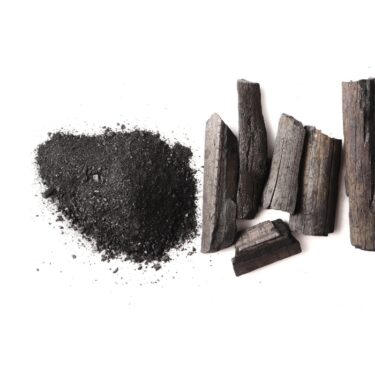
Carvacid is an activated carbon with adsorption capacity for both organic vapors and acid gases. It is manufactured by partial impregnation in an alkaline medium of a coconut shell carbon with a highly developed porosity. The carbon provides part of its surface to adsorb organics and another part as a catalyst for the oxidation of acid contaminants.
Carvacid removes more than twice as many mercaptans as a non-impregnated carbon because it oxidizes them to disulfides (RSH R2S2), which are more easily adsorbed, making them less odorous.
Compounds retained:
- All types of vapors and acid gases
- All types of organic vapors and gases whose molecular weight is greater than 60.
Acid gases and organic vapors retained by Carvacid
- Acetic acid
- Acrylic acid
- Adipic acid
- Benzoic acid
- Hydrobromic acid (HBr)
- Butyric acid
- Caprylic acid
- Caproic acid
- Carbolic acid (carbolic acid, phenol)
- Cyclohexanecarboxylic acid
- Hydrochloric acid (HCl) (also called muriatic acid)
- Stearic acid
- Ethyldimethylacetic acid
- Phenylacetic acid
- Hydrofluoric acid (HF)
- Formic acid
- Phosphoric acid (H3PO4)
- Isobutyric acid
- Lactic acid
- Lauric acid
- Linoleic acid
- Linolenic acid
- Myristic acid
- Nitric acid (HNO3)
- Oleic acid
- Palmitic acid
- Perchloric acid
- Propionic acid
- Hydrogen sulfide (H2S) (typical rotten egg smell)
- Sulfuric acid (H2SO4)
- m-toluic acid
- o-toluic acid
- p-toluic acid
- Uric acid
- Valerianic acid
- Valeric acid
- Hydroiodic acid (HI)
- Hydrogen bromide (the correct name for hydrobromic acid in the gas phase)
- Hydrogen chloride (the correct name for hydrochloric acid in the gas phase)
- Sulfur dioxide (SO2)
- Chlorine dioxide (ClO2)
- Phenol (carbolic acid, carbolic acid, carbolic acid)
- Hydrogen sulfide (the correct name for hydrogen sulfide in the gas phase)
- Hydrogen iodide (the correct name for hydrogen iodide in the gas phase)
The most common components are in bold
More information:
List of compounds retained by Carvacid 
Activated carbon impregnated with metal oxides for acid gases